From Sea Breeze to Summit Lines: Advanced Paramotor Techniques for Coastal Thermals and Mountain Cross‑Country
Forget everything you know about coastal and mountain paramotoring in Brazil. Coastal thermals, sea breeze convergence, and ridge lift don’t just happen—they demand sharp eyes and precise skill to harness safely. In this guide, you’ll master advanced paramotor techniques that turn Brazil’s Espírito Santo to Rio corridor into your personal flying playground. Ready to fly smarter, safer, and further? Explore more here.
Mastering Coastal Thermals
Unlocking the secrets of coastal thermals can elevate your paramotor flying. This section dives into two key aspects to boost your coastal skills.
Reading Sea Breeze Convergence
Imagine a gentle push from the sea as the breeze converges. This natural phenomenon can lift you higher if you know what to look for. Sea breeze convergence happens when onshore breezes meet the cooler air from the sea. It creates a line of rising air. Watch for cloud lines that align with the coast. These often hint at convergence zones. When you find these lines, position yourself where the sea breeze meets the land’s heat. Remember, the early afternoon is often the best time as the sun heats the ground.
Now, let’s dispel a common myth. Many think you must fly high to catch these thermals, but often the best lift is lower, closer to the coast. This allows you to soar along the coastline without climbing too high. Understanding these patterns not only enhances your flight but also ensures safer navigation. Learn more about coastal inversions.
Harnessing Ridge Lift Paramotoring
Flying along ridges offers a unique thrill. Ridge lift occurs when wind hits a hillside and is forced upward. This is your ticket to longer flights without burning extra fuel. Positioning is key: stay just above the ridge line and in the sweet spot where the wind flows smoothly upwards.
But here’s something unexpected: you don’t always need strong winds. Even moderate winds can produce significant lift. The trick is to find a slope that faces directly into the wind. This maximises the lift potential. Also, be mindful of any nearby obstacles as they can create turbulence. Safe ridge flying is about balance: between the ridge and the wind. Master this, and you’ll enjoy smoother, more efficient flights. For a deeper dive into these techniques, explore cross paragliding insights.
Mountain Cross-Country Tactics
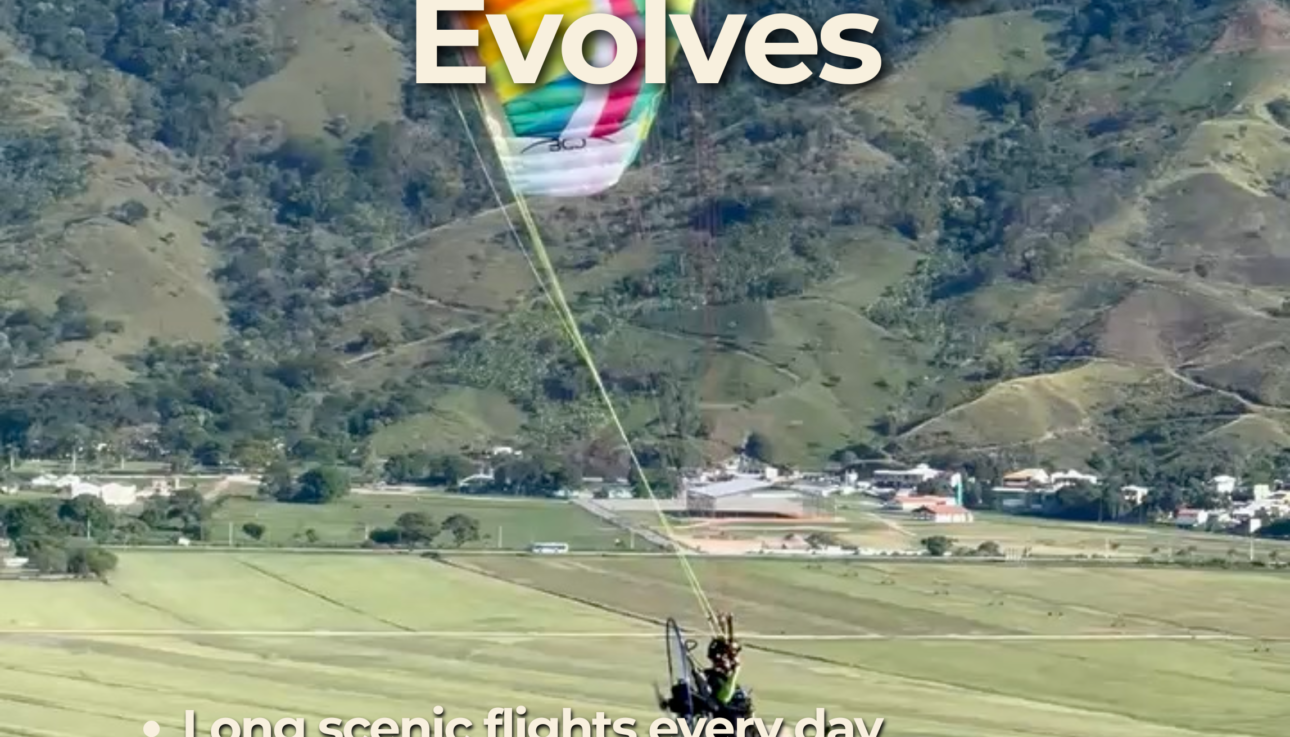
Venturing into mountain terrains introduces new challenges and rewards. Let’s explore how you can navigate these routes effectively.
Navigating Valley Winds Brazil
Valleys in Brazil present unique wind patterns. Understanding these can make or break your cross-country journey. Valley winds often shift from katabatic (down-slope) in the morning to anabatic (up-slope) as the day warms. Timing your flights with these shifts allows for smoother navigation.
Consider your flight path carefully. Plan to fly early for calmer conditions. As the day progresses, adjust your route to follow warming slopes. This helps you harness the up-slope winds effectively. A handy tip: use visible markers like tree movement or dust trails to gauge wind strength and direction. This boosts situational awareness and enhances decision-making during flight. Dive into more cross-country strategies in the Skynomad guide.
Rotor Avoidance in Paramotoring
Rotor zones can be perilous for paramotor pilots. Formed by wind flowing over mountains, they create turbulent air on the leeward side. Avoidance starts with awareness. Know your terrain and predict where rotors might form.
Knowledge is power here. Stay on the windward side of the ridge whenever possible. This keeps you in smoother, safer air. If you must cross a ridge, do so at a steep angle and higher altitude to minimise exposure to rotors. Remember, the stronger the wind, the larger the rotor. Keep your eyes on the terrain and trust your instincts. This foresight is crucial for safe, enjoyable mountain flights.
Preparing for Brazilian Coast Routes
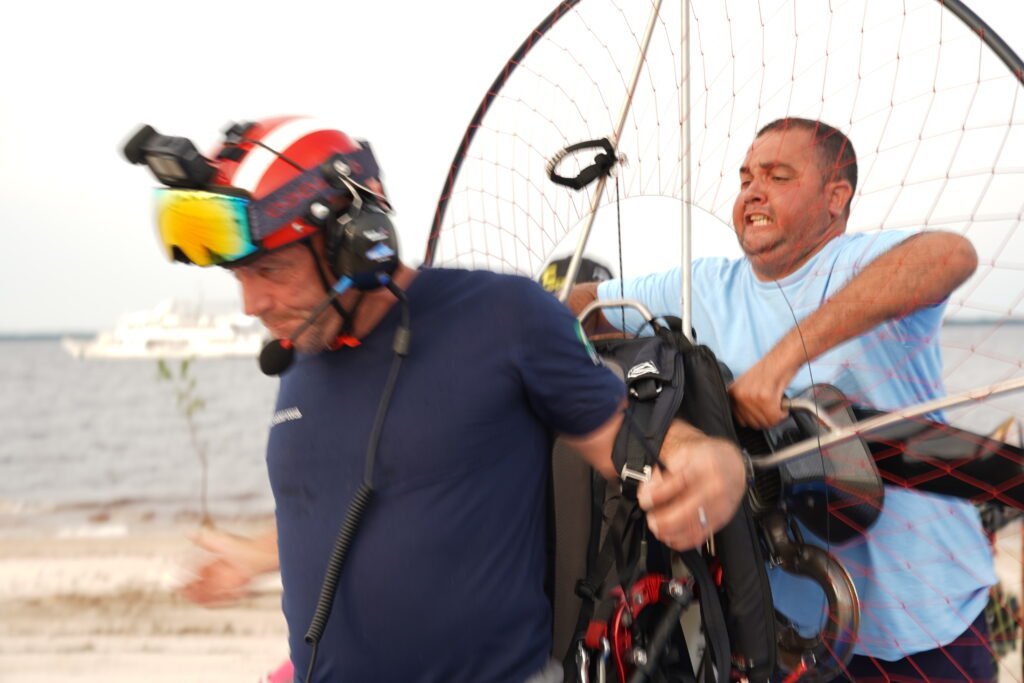
Proper preparation is the backbone of a successful paramotor adventure. Pay attention to these essentials before setting off on your Brazilian coast journey.
Paramotor Weather Briefing Essentials
Checking the weather is more than just looking at a forecast. It’s about understanding how conditions affect your flight. Focus on wind speed, direction, and thermal activity. These are your primary concerns. Morning briefings should include a review of local weather patterns and any changes from the previous day. This sets the tone for a safe flight.
Consider using weather apps designed for pilots. These provide detailed insights and real-time updates. Use this data to adjust your flight plan accordingly. Remember, weather can change rapidly along the coast. Staying informed keeps you ahead of the curve and ready for surprises.
Support Vehicle and Retrieve Planning
A well-planned support system is your safety net. Before heading out, ensure your support vehicle is equipped for all scenarios. This includes fuel, spare parts, and communication devices. Plan your routes with retrieve points in mind. These are locations where the vehicle can easily meet you if you need to land unexpectedly.
Communication is key. Equip your team with radios to maintain contact. This ensures everyone knows the plan and can respond quickly if needed. By planning your retrieve strategy, you minimise downtime and maximise flying time. It’s all about seamless coordination for a worry-free adventure. For more tips on planning your expedition, watch this guide on YouTube.
In conclusion, mastering these advanced paramotor techniques transforms your flights along Brazil’s coast and mountains. Each strategy enhances your skill, safety, and enjoyment. Whether chasing coastal thermals or navigating mountain winds, these insights prepare you for a memorable journey. Safe flying and happy exploring!