Five reasons
to fly the Amazon.
You have done the coastline. You have done the mountain trip. You have crossed the channel and logged your hours in the Alps. Now ask the harder question — what do you actually want to do with this skill?
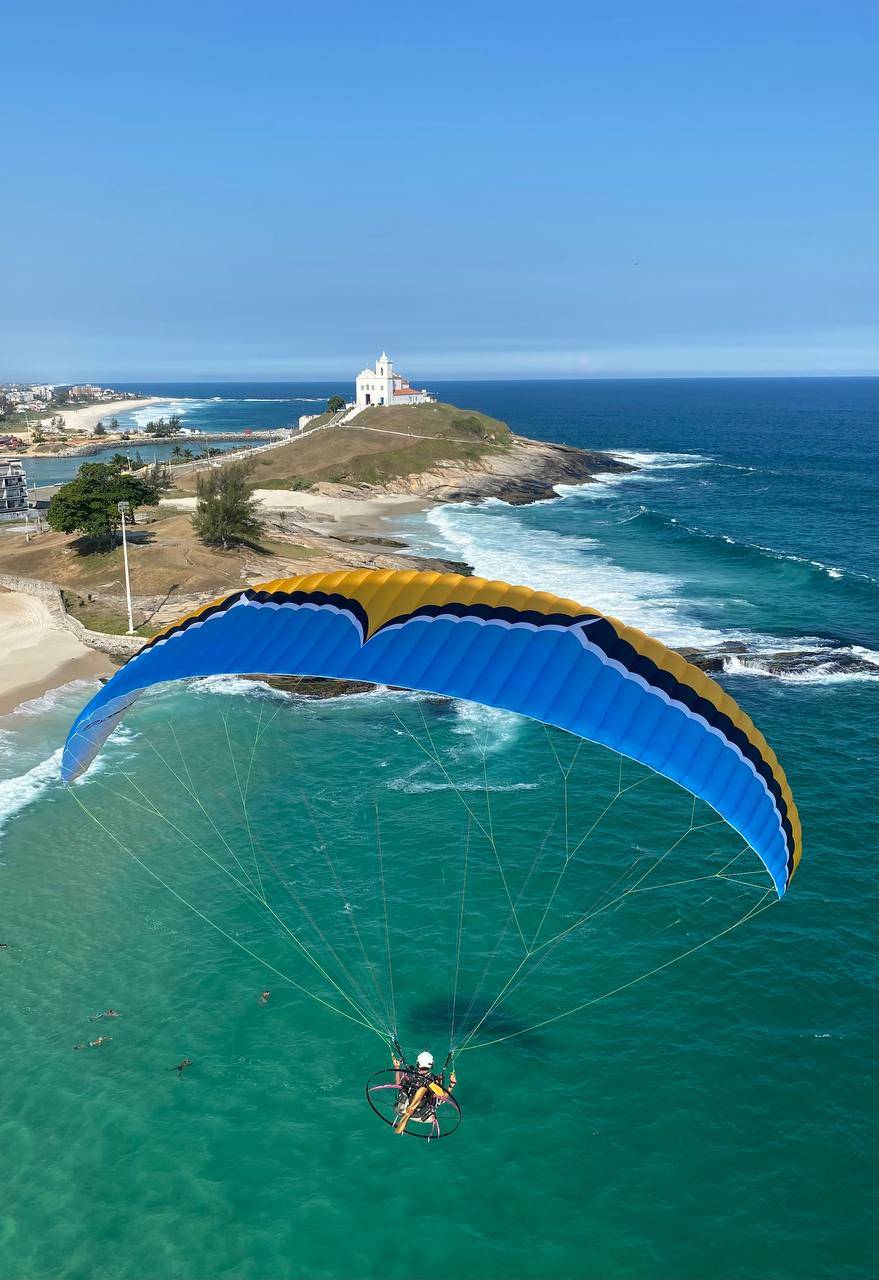
You have flown the coastline. You have done the mountain trip. You have crossed the channel and logged your hours in the Alps. Now it is time to ask a harder question: what do I actually want to do with this skill?
For a growing number of pilots, the answer is the Amazon.
The Amazon Paramotor Expedition 2026 — led by APPI Power Master Ricardo "Caju" Maciel through Why Not Travel Trips — is opening a limited number of spots for November–December 2026. Here are five reasons this should be on your radar.
1. You will fly where almost no paramotor pilot has ever flown
The Amazon basin covers 40% of South America. It is larger than the entire continent of Australia. The number of paramotor pilots who have flown over true primary Amazon rainforest can probably be counted in the hundreds globally.
When you fly here, you are not following a well-worn tourist route. You are going somewhere genuinely remote. The footage you bring back will be unlike anything your fellow pilots at the flying school have ever seen.
This matters not just for the story. It matters because the experience itself — the feeling of flying above an unbroken canopy with no road, no town and no crowd beneath you for a hundred kilometres — is something that fundamentally changes how you think about what a paramotor can do.
2. The scale is incomprehensible until you are there
People who have never visited the Amazon often picture it as "a big jungle." This is like describing the Pacific Ocean as "a large puddle."
The Amazon River carries more water than the next seven largest rivers on Earth combined. The rainforest produces 20% of the world's oxygen. The canopy contains more species of tree in a single hectare than exist in all of the UK.
From the air, on a clear morning with visibility stretching to the horizon in every direction and nothing but green and silver below, the scale becomes visceral. You understand, in a way that photographs never quite capture, why this place is called the lungs of the Earth.
This is your office for 11 days.
3. The wildlife encounters are like nothing else on Earth
You will share your airspace with birds most people have only seen in documentaries. Scarlet macaws in formation. Toucans crossing between the trees. If you are lucky — and you may well be — a harpy eagle, the apex predator of the Amazon sky, will track you from a distance.
At river level, pink river dolphins surface beside the support boat. Caimans line the banks in the early morning. Giant river otters fish in the oxbow lakes. Capybaras — the world's largest rodent, and surprisingly relaxed around low-flying paramotors — graze on the floodplains.
Ricardo and the local guide team know the areas where wildlife concentrations are highest. Flight planning on this expedition does not just consider wind and thermals — it considers where the birds are most active, which rivers to follow, which lagoons to circle.
4. Small group. Total support. Zero faff.
This is a maximum six-pilot expedition. Not a festival. Not a mass event. Six people, one experienced leader, a ground support team, and eleven days in one of the world's great wildernesses.
Every morning, Ricardo delivers a weather briefing and flight plan. Ground crew move with the group, tracking GPS positions, carrying spare fuel, and managing accommodation and logistics. Your job is to fly. Everything else is handled.
Ricardo has led expeditions across South America for over two decades. He organised the Paramotor World Championship in Saquarema. He has flown in Brazil, Argentina, Paraguay and the Emirates. He knows what can go wrong in the field, and has systems for every scenario.
This is not an adventure where you are on your own and hope for the best. It is a professionally managed expedition where experienced leadership means you can focus entirely on the flying.
5. The Amazon is changing — fly it while it is still like this
The Amazon faces real pressures. Deforestation, climate change and agricultural expansion are reshaping the edges of the basin. The primary forest — the ancient, untouched canopy over which you will fly — is protected, but its future is not guaranteed.
Flying the Amazon in 2026 means experiencing this ecosystem at a moment in time. The footage you take, the memories you make, the perspective you gain — these will carry a weight that a standard beach trip simply cannot.
There is something meaningful about visiting wild places while they are still wild. The Amazon in 2026 is still extraordinary. The window to experience it from the air, in the way this expedition offers, is open now.
The details
- Dates: November–December 2026 (exact dates confirmed on booking)
- Duration: 11 days
- Group size: Maximum 6 pilots
- Price: From £3,800 per pilot
- Skill level: Intermediate+ (PPG licence, min. 50 hours PIC)
- Includes: Ground support, fuel logistics, accommodation, local guide, briefings
- Led by: Ricardo "Caju" Maciel, APPI Power Master Instructor
Enquire now — spots are strictly limited and deposits are being taken.
The Amazon is waiting. The question is whether you are ready for it.